

- April 6, 2022
Rally Jameel: One Shot at Empowering Female Drivers
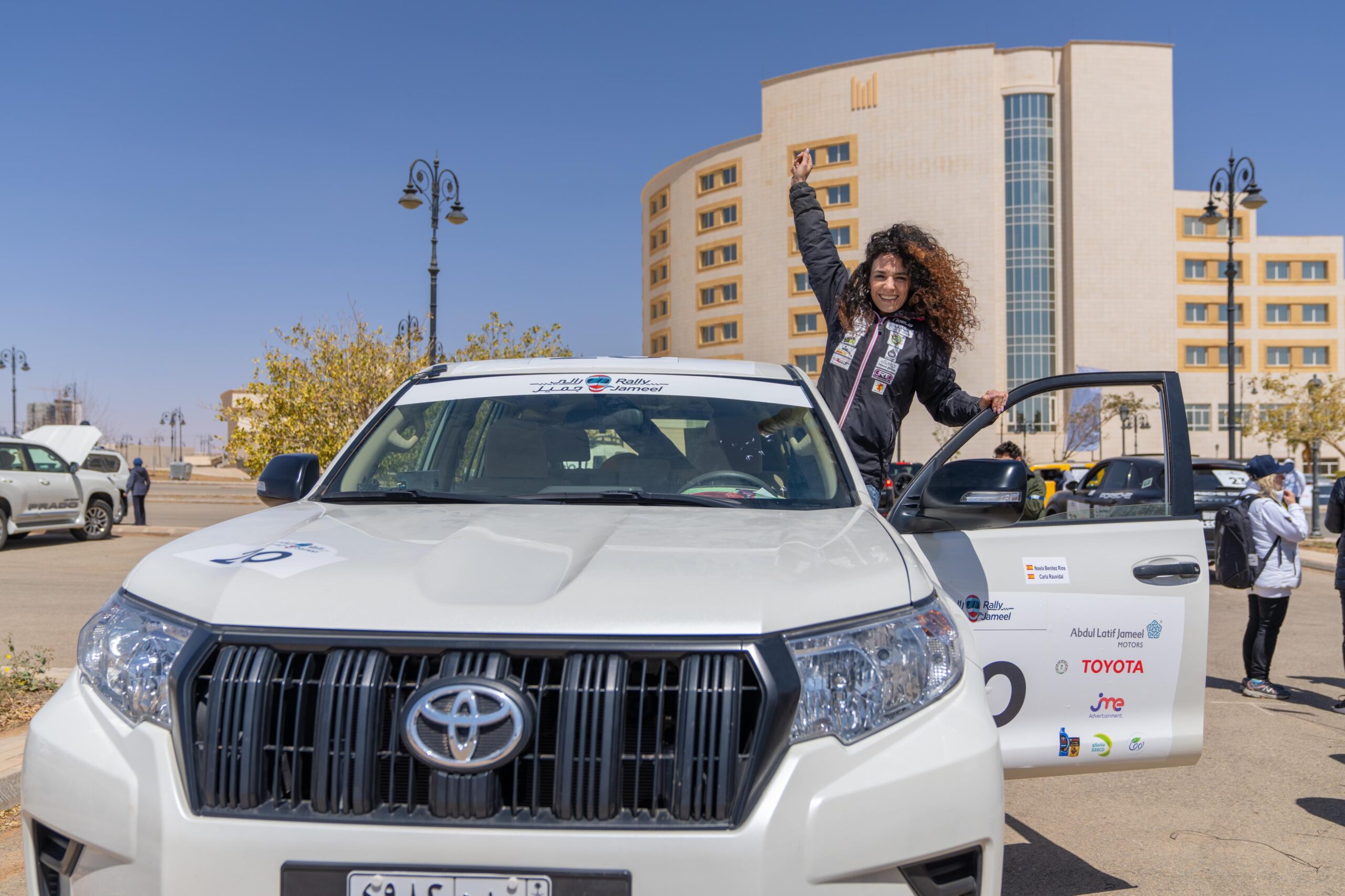
The Rally Jameel got off to a good start in 2017, when Saudi Arabian women were granted the privilege to drive. Last month, the ceremonial green flag was flown by Prince Abdulaziz bin Saad bin Abdulaziz during the kingdom’s first all-women rally at Qishlah Palace in Hail, and Saudi Arabia celebrated another historic beginning for women.
The event marked the beginning of a new era in the kingdom for women’s racing. Rallying, often known as desert racing, began in the early twentieth century. Racers drive customised cars across rugged off-road terrain for extended distances, usually in stages. Checkpoints or waypoints are frequently included on routes, such as the famed Paris-Dakar Rally, where drivers and navigators earn points as they navigate their path to the finish line.
Ms Saleh a Siemens engineer from the United Arab Emirates said “Getting here and being in our first drivers’ meeting gave me goose bumps, I’m excited to be the driver. But we’re switching if something goes really wrong.”
Prior to 2017, Saudi women could only practise driving by playing video games such as Grand Theft Auto and Gran Turismo. It was time to get down on the ground and have some fun. The rally, which took place in mid-March, drew competitors from 15 nations, including the United Kingdom, Germany, Oman, Spain, Sweden, and the United States. There were 34 two-woman teams, with at least one Saudi in nearly half of them.
Over 1,100 kilometres (687 miles) were traversed by the Jameel, with over 340 kilometres (212 miles) off-road. Teams were given road books the night before each of the three stages, which had 141 waypoints. A Stella III EVO rally computer, a high-tech odometer fastened to the dashboard using Velcro and duct tape, had a computerised copy of the route and used GPS to track a team’s speed and location. Each waypoint on the Stella was opened at a distance of 800 metres (half a mile), and when drivers were 90 metres (approximately 100 yards) from the bull’s-eye, the computer verified the waypoint and awarded points.
For extra point possibilities, four-time, speed, and distance challenges known as average speed challenges were implemented. Each team’s rally computer recorded its speed at predetermined intervals within predetermined distances, and penalties were issued if drivers were not accurate. Try driving at exactly 38 kilometres per hour (23.6 miles per hour) for 20 kilometres through soft sand highways, around hairpin corners on gravel roads, or up steep inclines if you think driving fast is impossible.
Hassan Jameel, the deputy president and vice chairman of the Abdul Latif Jameel group and Bakhashab Motorsports Development, and himself a great rally driver, devised and financed the Rally Jameel. It was also supported by Saudi Ambassador to Washington, Princess Reema bint Bandar Al Saud.
The rally’s first stage took racers from Hail, in northwest Saudi Arabia, to Jabal Umm Sinman Mountain, close east of the UNESCO cultural site of Jubbah, where petroglyphs and inscriptions date back approximately 10,000 years may be seen on the desert rocks. However, sightseeing was not on the team’s agenda since fines were imposed if you didn’t return within a certain amount of time – and no speeding was permitted.
In the larger rally world, the winner is determined by speed and navigational precision. However, off-road, the Jameel enforced a speed restriction of 70 km/h, and posted limits applied on roadways. There would be no sophomore year without a successful and safe first event. Organizers also realised that introducing speed would need the use of a racecar with a roll cage. The rally’s major goals were to make more automobiles accessible to more women, hence the vehicles were cars that could be found in any driveway.
The rally’s second stage included a journey from Hail to a glamping-style bivouac 600 metres above Al Mithnab, a governorate in the Qassim area not far from Antara’s Rock, a famous boulder that looks to have been cut in half by a razor. Antarah ibn Shaddad, a sixth-century poet and warrior, is supposed to have met his love, Abla, under its shadow.
Rally Jameel organisers based their concept on the Rebelle Rally, the United States’ longest map-and-compass navigation rally, which is also for women.